
What We Learned at Future of Energy Conference 2026
1 September 2026 · Clean Energy
Read28 July 2026 · 5 min read
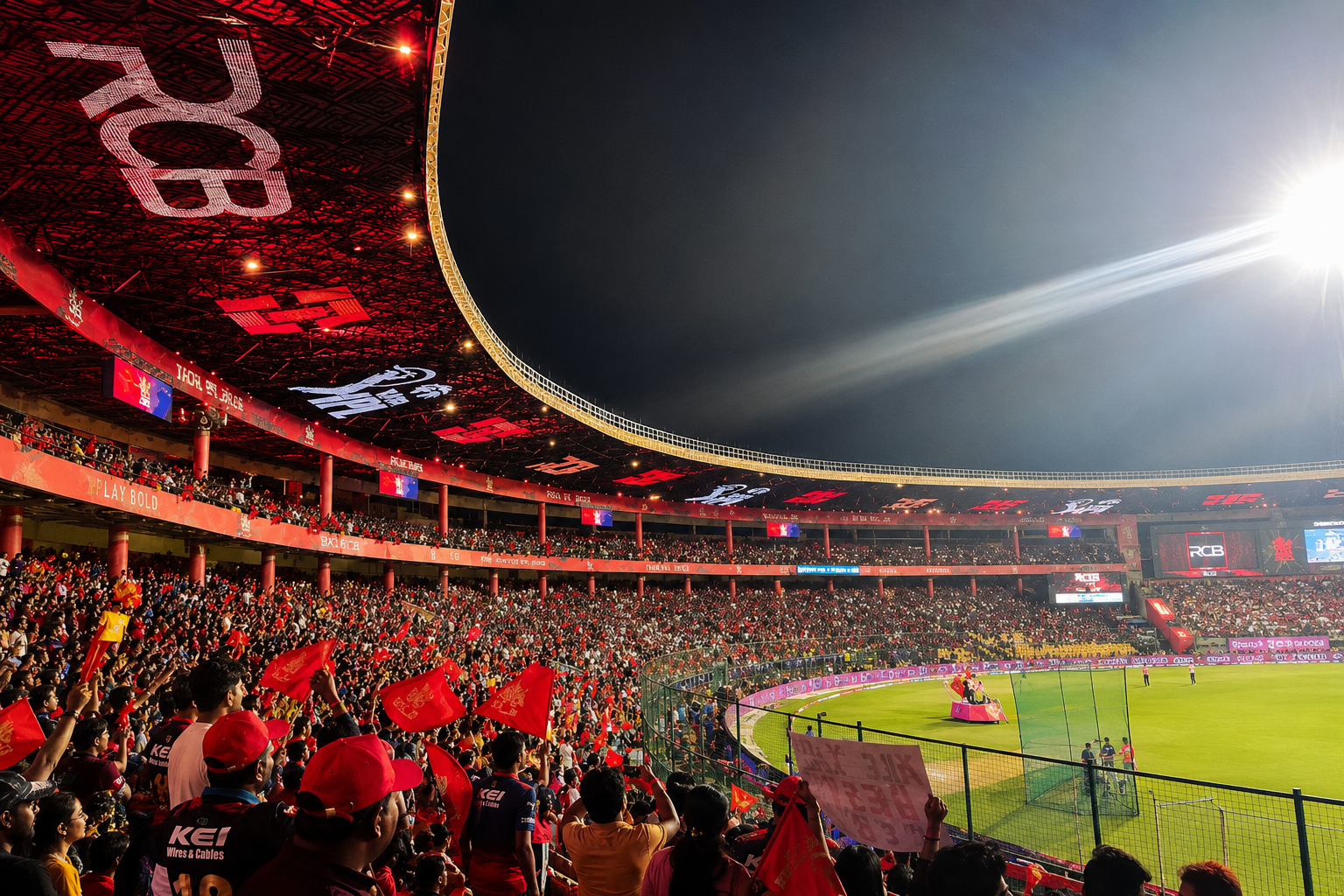
We worked with Royal Challengers Bengaluru (RCB) to measure and assure the greenhouse gas (GHG) footprint of its IPL Season 19 home matches. The work covered diesel generators, fan travel, team travel, accommodation, waste and grid electricity, resulting in a reported footprint of 1,516 tCO₂e, against 1,585 tCO₂e of reductions through voluntary fan contributions.
This was more than an exercise in adding up stadium electricity and fuel. It gave us a detailed view of how emissions are created across a major sporting event, and one finding stood out: fan travel was the largest reported source in the inventory.
How did we build RCB's carbon footprint?
A cricket match creates emissions long before the first ball is bowled.
Fans travel to the stadium. Teams and staff travel between cities. Players and staff stay in hotels. The stadium uses electricity and, where required, diesel generators. Waste is generated throughout the matchday operation.
For our work with RCB, we therefore looked beyond the stadium itself. The inventory covered six reported sources: diesel generators at 286 tCO₂e, fan commuting at 523 tCO₂e, team travel at 268 tCO₂e, accommodation at 259 tCO₂e, waste at 4 tCO₂e and grid electricity at 176 tCO₂e. Together, these categories produced the reported 1,516 tCO₂e footprint for the IPL Season 19 home matches.
This wider boundary matters. If an event only counts what happens inside the venue, it misses a significant part of the emissions associated with bringing the event to life.
What did the inventory reveal about fan travel?
The clearest observation from our assessment was the size of fan commuting emissions.
At 523 tCO₂e, fan travel was the largest reported source in the inventory. That makes sense when you consider the scale of a major cricket match. Thousands of individual journeys can collectively outweigh emissions from several operational categories inside the stadium.
RCB has also made fan mobility part of its wider sustainability programme. Its work includes surveying fan commute patterns and ride-sharing, while encouraging supporters to use public transport, including Bengaluru Metro access linked to match tickets.
For us, this was one of the most useful findings from the engagement. Event organisers often start with what they can directly control: electricity, fuel and waste. A full GHG inventory can reveal where the larger opportunities actually sit.
How did we account for the full season?
Building an event footprint involves more than collecting activity data. The calculation also needs clear boundaries and documented assumptions.
We worked with activity data across travel, energy, accommodation and other relevant sources. Where complete match-level data was not available, the methodology included extrapolation from five matches to seven matches. We see this transparency as an important part of the work. Estimates are sometimes necessary in event inventories. What matters is documenting where estimation is used, what data supports it and how the final figure is derived.
ISO 14064-1:2018 provides requirements for quantifying and reporting organisational GHG emissions and removals. ISO 14064-3:2019 provides requirements and guidance for the verification and validation of GHG statements.
The standards provide a framework. The quality of the final inventory still depends on the activity data, emission factors, boundaries and assumptions used in the assessment.
What did limited assurance add to the work?
We took the inventory through independent limited assurance under ISO 14064-1:2018. For us, assurance was an important part of the engagement because the inventory was intended to support a public carbon-neutral season. An independent review provides an additional layer of confidence that the reported information has been assessed against defined criteria.
Limited assurance is distinct from reasonable assurance. The level of work and testing is different, but both are designed to provide assurance over the information being reported. ISO 14064-3:2019 sets out requirements and guidance for validating and verifying GHG statements. This is particularly relevant for sports. A carbon-neutral event is a public sustainability statement, and the underlying numbers need to be supported by a process that others can understand and review.
How did the carbon-neutral mechanism work?
Once the event footprint was established, the next step was to account for the reductions used to balance it.
For this engagement, the reported footprint of 1,516 tCO₂e was set against 1,585 tCO₂e of reductions from voluntary fan contributions. The difference between measuring emissions and balancing them is important. First, we need to know what the event emitted. Then, the reduction mechanism needs its own accounting and supporting evidence.
RCB's broader sustainability programme also includes measures designed to reduce the footprint at source. These include waste segregation and management, solar-powered lighting, public-transport promotion and efforts to reduce resource consumption. That combination matters. Carbon accounting is most useful when it helps organisations understand their emissions, identify where they come from and build practical actions around the findings.
What did this work teach us about carbon-neutral sports?
Our work with RCB reinforced one simple point: a sports event's carbon footprint is much bigger than the stadium.
Fan travel, team movement and accommodation can represent a substantial share of the total. Waste and energy remain important, but they are only part of the picture.
It also showed why event inventories need to be designed around the way an event actually operates. A cricket season is a moving system involving a venue, teams, staff, suppliers and thousands of spectators. The GHG inventory needs to reflect that reality.
RCB has been building its sustainability programme around measurement, accountability and fan participation. The franchise traces its Green Initiative back to 2011 and has continued expanding its work across energy, waste, mobility and fan engagement.
For other sports franchises and event organisers, the starting point is not a carbon-neutral label. It is a good inventory.
Define the boundary. Identify the material emission sources. Collect the activity data. Document the assumptions. Then put the inventory through independent assurance.
That is how a sustainability programme moves from a broad ambition to something that can actually be measured, reviewed and improved.
Keep reading
1 September 2026 · Clean Energy
Read
10 August 2026 · Clean Energy
Read
5 August 2026 · Carbon Removal
Read