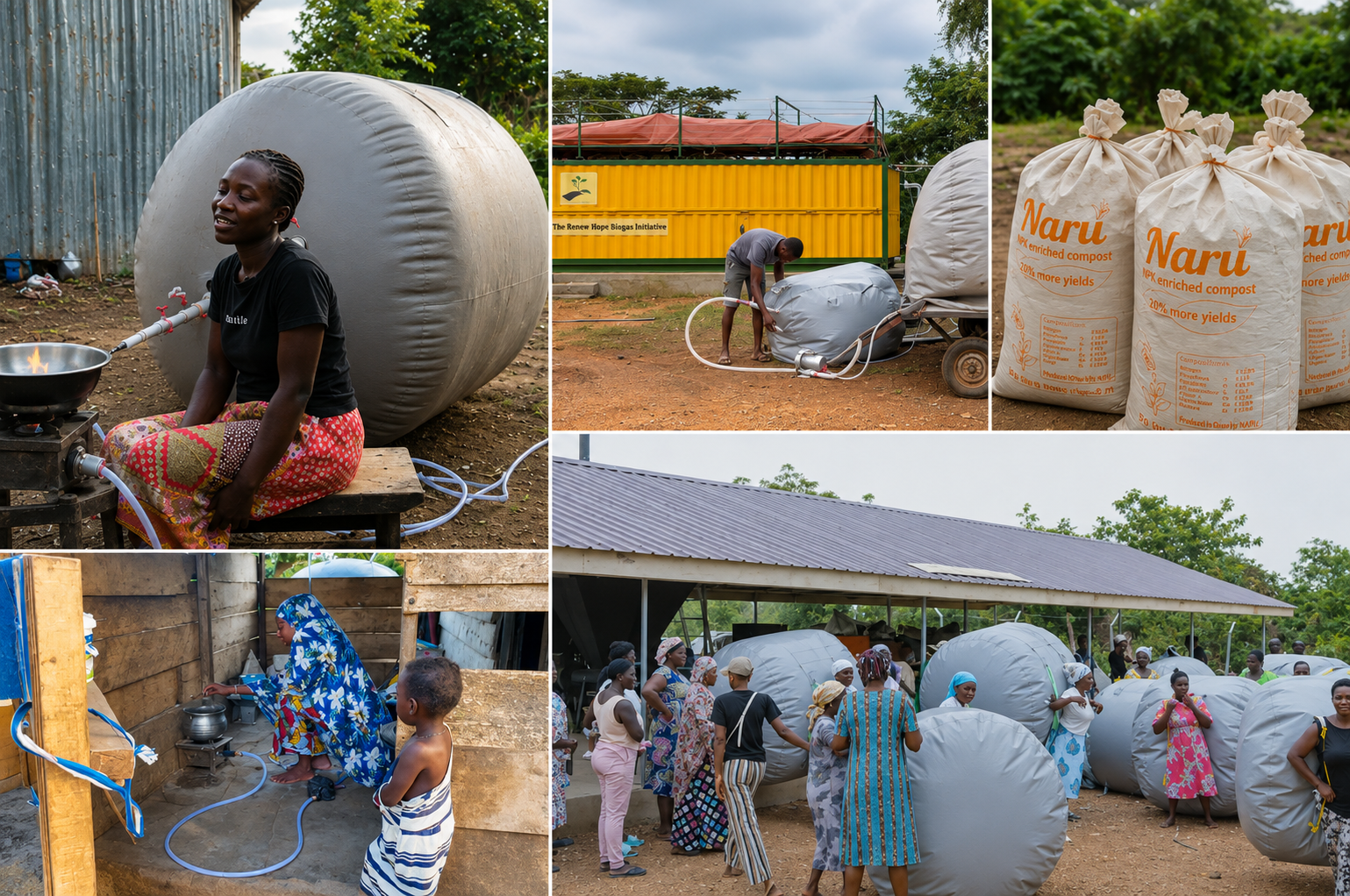
Designing a Decentralized Energy Business for Ghana: Inside the Renew Hope Initiative
10 August 2026 · Clean Energy
Read1 September 2026 · 3 min read
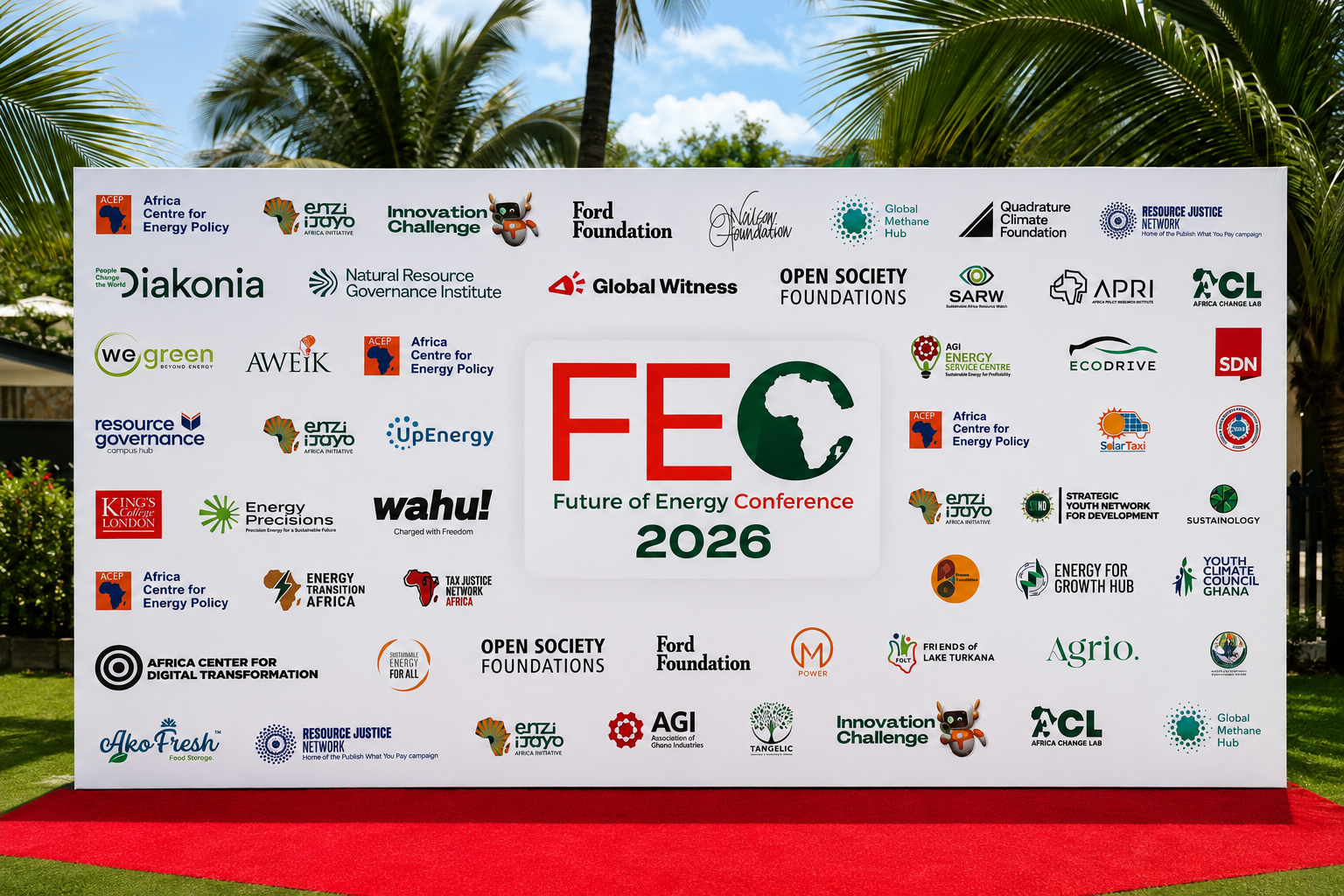
At the Future of Energy Conference 2026 in Accra, we put the Renew Hope Initiative in front of people working across energy, research, development, and industry. The conversations reinforced something important: interest in biogas grows when people can see the full system around it.
Renew Hope is not only about producing gas. It is about taking locally available organic waste, recovering energy from it, and returning useful material to agriculture.
Sustainology participated as an exhibitor at the Future of Energy Conference on 25–26 August 2026 at Labadi Beach Hotel in Accra.
The conference focused on “Powering Africa’s Industrial Transformation: Energy Systems for Value Addition and Competitiveness.” That made it a relevant setting for us to present Renew Hope as a decentralised model connecting organic waste, energy and agriculture.
At our booth, we spoke with visitors who had very different levels of familiarity with biogas. Some wanted to understand the basic model. Others asked detailed questions about the technology, its effectiveness and where it could be applied.
Those conversations were useful because they moved quickly beyond the question of whether biogas works.
The more interesting question was: what can this system solve?
People wanted to know what types of organic waste could be used, how effectively gas could be produced, where a system could be deployed and what happened to the material left after digestion.
That matters.
A waste-to-energy project is easier to understand when the value chain is visible from beginning to end. Organic material is not simply collected and treated. It becomes an input.
For Renew Hope, one pathway is:
Organic waste → Biogas → Energy
At the same time, another is:
Organic waste → Digestate → Compost → Agriculture
Together, these pathways explain the model more clearly than describing Renew Hope only as a biogas project.
The conference also opened conversations around the use of organic waste from businesses and larger developments. Other discussions went deeper into gas production and technical performance.
We are taking those questions seriously. They show us what project developers, technical organisations and potential collaborators need to understand before a circular energy system becomes relevant to them.
Energy is only one part of the process.
Anaerobic digestion also leaves digestate. With appropriate processing and quality control, that material can form part of an agricultural nutrient and soil-management pathway.
This is particularly important for a model such as Renew Hope because the system begins with organic resources and does not have to end when the gas is used.
The aim is to keep useful material moving through the local economy.
That connection between waste, energy and agriculture was one of the clearest lessons from our conversations in Accra. Stakeholders were interested not simply in disposal or gas production, but in how more value could be recovered from the same resource.
The wider conference discussions looked at the energy systems Africa needs to support industrialisation, productive activity and economic competitiveness.
For us, the relevance is at a smaller scale as well.
Decentralised energy systems can begin with resources already available within communities, farms and businesses. In the case of Renew Hope, that means asking whether organic material currently treated as waste can instead contribute to local energy production and agricultural value.
This does not replace the need for larger energy infrastructure. It addresses a different part of the problem.
The conference helped us see where that proposition generates interest and, just as importantly, which questions we need to answer more clearly.
The exhibition is over. The useful part now is the follow-up.
We are continuing conversations where there is a clear fit around organic waste, decentralised energy, agricultural use or technical collaboration. We are also using the questions we heard in Accra to make the Renew Hope model easier to understand and evaluate.
For organisations dealing with significant organic waste, the starting question is simple: what value is currently being discarded with it?
Keep reading
10 August 2026 · Clean Energy
Read
3 July 2026 · Clean Energy
Read
5 August 2026 · Carbon Removal
Read