What We Learned at Future of Energy Conference 2026
1 September 2026 · Clean Energy
Read3 July 2026 · 6 min read
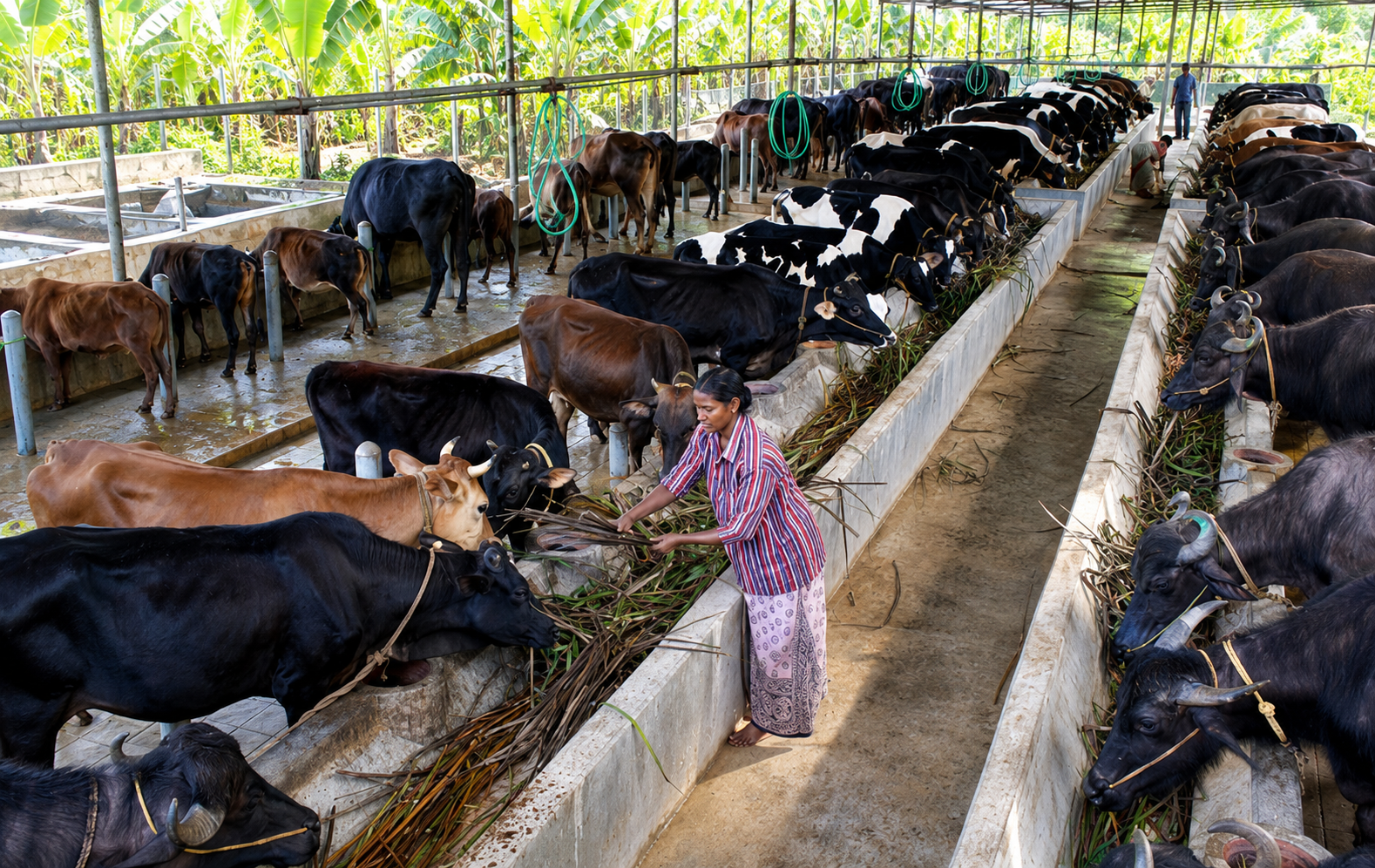
Cattle dung can be a waste problem, or it can become an energy source. Across nine livestock sites in India, the Animal Dung2Power project changes what happens after the waste leaves the cattle shed: dung is collected, digested, and converted into biogas for electricity, while the remaining material is recovered as organic fertilizer.
The climate case starts with methane. Instead of allowing methane from decomposing manure to escape into the atmosphere, the project captures the gas and puts it to work.
Methane is produced when organic material breaks down without oxygen. Manure stored under anaerobic conditions can therefore become a significant source.
Methane also has a much stronger warming effect than carbon dioxide in the near term. The United Nations Environment Programme (UNEP) reports that methane has around 80 times the warming potential of carbon dioxide over the 20 years after it is released.
That makes manure management an opportunity to act on two problems at once. Capture the methane before it reaches the atmosphere, then use the captured gas as an energy source.
For this project, the documented baseline is manure left to decay anaerobically. The intervention changes that pathway by moving the dung into controlled anaerobic digesters where the resulting biogas can be collected and used.
The process begins at the cattle sheds. Dung is collected on site and moved into collection tanks, where it is mixed into a consistent slurry before entering the digesters.
The project operates across nine sites in India, with individual digesters ranging from 200 m³ to 2,000 m³. Together, they provide 6,300 m³ of installed digester capacity and are designed to treat around 126 tonnes of cattle dung per day.
Inside each digester, microorganisms break down the organic material in the absence of oxygen. This produces biogas containing methane.
The gas then moves through storage and cleaning systems before reaching the generators. The project documentation records nine generators with a combined installed capacity of 793 kW, supplying electricity for use at the project sites.
So the chain is direct: cattle dung → biogas → electricity.
And that electricity has another climate effect. Power generated from recovered biogas reduces the amount of grid electricity required at the sites.
The process does not end with energy.
Once digestion is complete, the treated slurry is dewatered. The remaining solid material is used as organic fertilizer.
That matters because the nutrients in animal waste are not lost when its methane is captured. They can return to agricultural soils in a more useful form.
The project therefore creates a circular flow. Livestock produces manure. Manure produces biogas. Biogas produces electricity. The material left after digestion goes back towards agriculture.
Waste management, renewable energy and soil inputs become parts of the same system.
Installing a biodigester does not automatically create a carbon credit.
The carbon case has to show what would have happened without the project, what changed because of it and how that difference is measured.
For Animal Dung2Power, the first source of emission reductions is methane recovery from manure. The second is the displacement of grid electricity through captive biogas power generation.
The project therefore needs data from the physical operation itself. How much manure enters the system? How long was the plant operating? How much electricity was generated? How much methane could the baseline manure system have produced? What emissions still occur within the project?
This is where Measurement, Reporting and Verification (MRV) connects engineering with carbon accounting.
Meters and operating records turn a functioning biogas plant into measurable data. The methodology then determines how that data is converted into an emissions result.
Biogas works because of biology, which means performance cannot be taken for granted.
A digester needs a steady supply of manure with the right consistency. Temperature, retention time and operating conditions affect how much biogas is produced. The gas then has to be captured, cleaned and delivered reliably to the generators.
This is where installed capacity and actual impact can diverge. A digester may be designed for a certain volume of waste, but the climate benefit depends on how much manure is actually treated and how consistently the system operates.
For a carbon project, those variations have to show up in the data. Monitoring manure inputs, plant operation and electricity generation is therefore part of measuring the climate outcome, not simply an operational exercise.
Sustainology works on the carbon development and Measurement, Reporting and Verification (MRV) side of the project.
The work begins with the baseline: how the manure was previously managed and where methane emissions occurred. From there, we map what changes after treatment, including the amount of manure processed, methane recovered and electricity generated.
The carbon methodology determines which of those parameters need to be monitored and how they enter the emissions calculation. We translate those requirements into the monitoring and documentation needed to measure the project over time.
For Animal Dung2Power, this means connecting the physical operation of the biogas plants with the carbon accounting behind the project. The equipment creates the intervention. The data shows what that intervention achieves.
The value of this model does not stop at avoided emissions.
The project manages an agricultural waste stream, captures energy that would otherwise be lost, generates electricity and returns the remaining organic material to agriculture as fertilizer.
That creates a circular flow from the same material. Cattle produce manure. The manure produces biogas. The biogas produces electricity. The material remaining after digestion returns to productive use.
Carbon finance adds another layer by recognising the climate value of preventing methane emissions and replacing grid electricity. But the underlying project remains physical: waste is treated, gas is captured, power is generated and nutrients are recovered.
The starting point is not the carbon credit. It is the waste stream.
A dung-to-power project needs enough manure in one place, a reliable collection system, digesters matched to that feedstock and a useful destination for the biogas. It also needs monitoring that reflects what actually happens at the plant.
Animal Dung2Power brings those pieces together across multiple livestock sites. It takes a methane-producing waste stream and turns it into energy and agricultural inputs while measuring the resulting climate benefit.
That is what makes the model useful beyond a single project. Animal waste does not have to remain a disposal problem. Managed differently, it becomes a source of energy, nutrients and measurable emission reductions.
Keep reading
1 September 2026 · Clean Energy
Read
10 August 2026 · Clean Energy
Read
5 August 2026 · Carbon Removal
Read