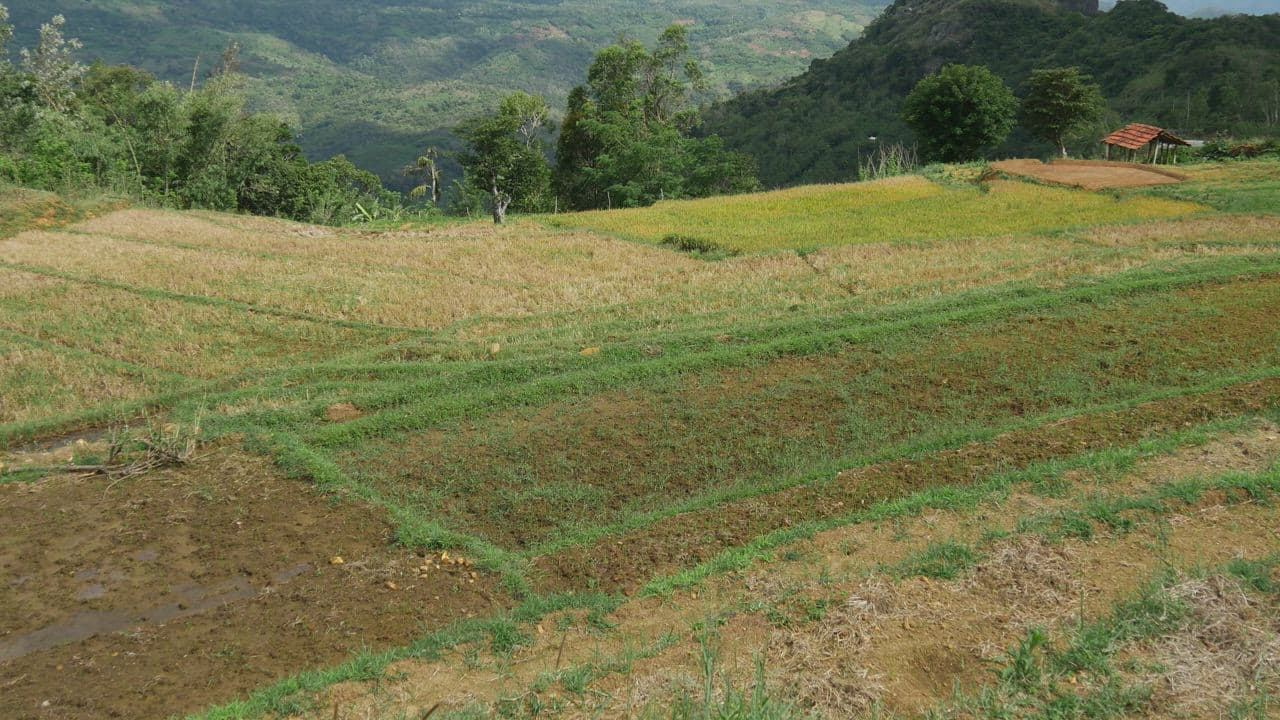
 Climate hero — muted loop: on-farm digester, flame, distribution pods.
Climate Infrastructure —community-scale biogas systems
Decentralised biogas systems installed on farms and in rural communities—turning organic waste into clean energy, better soil, and measurable climate impact.
Run by local micro-entrepreneurs. Monitored on the cloud.
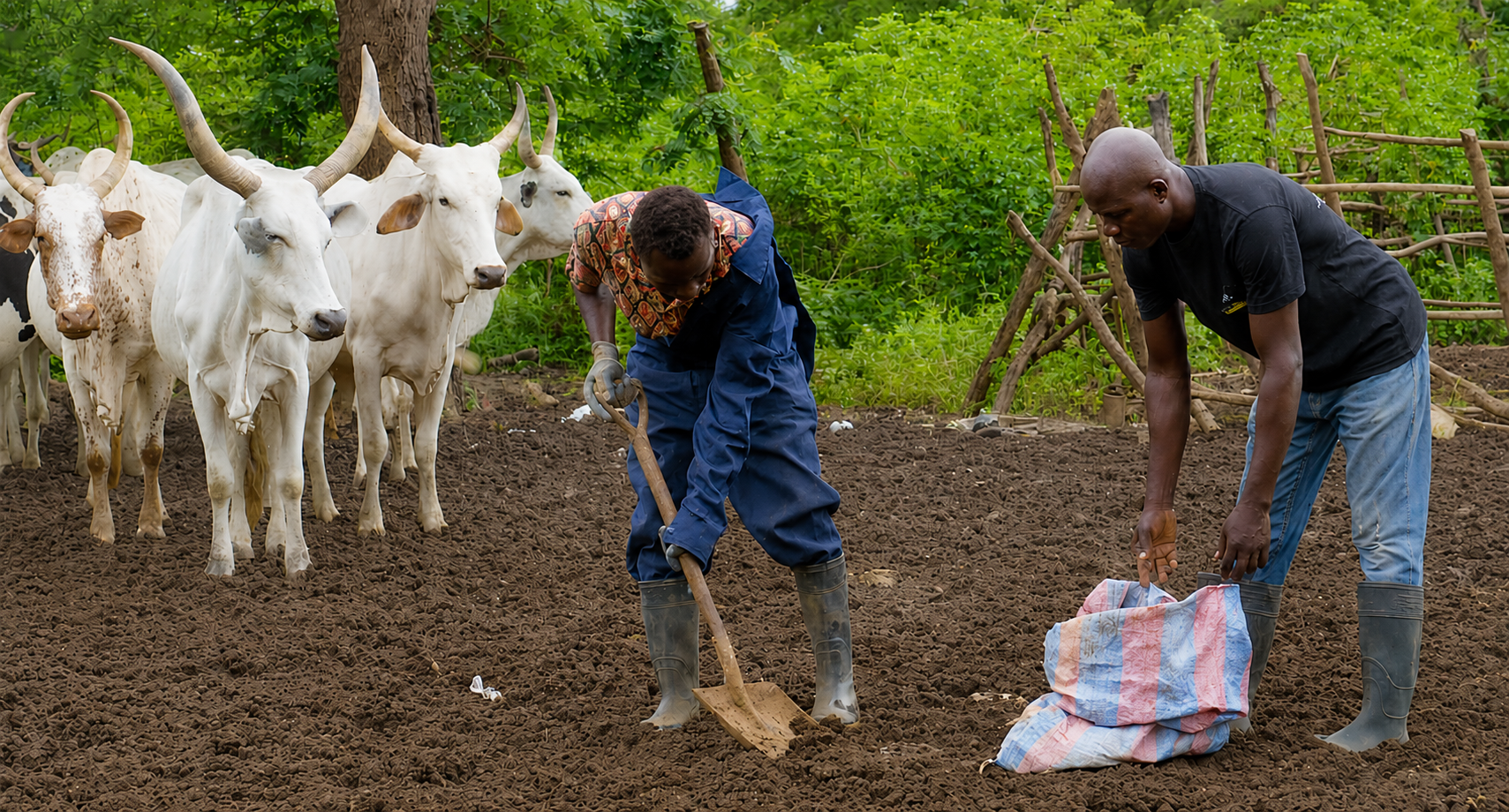
Waste becomes value.
Farm waste shouldn't be burned. Or left to rot.
Our biogas systems transform everyday organic waste into clean cooking fuel, organic fertiliser, and new income for rural communities.
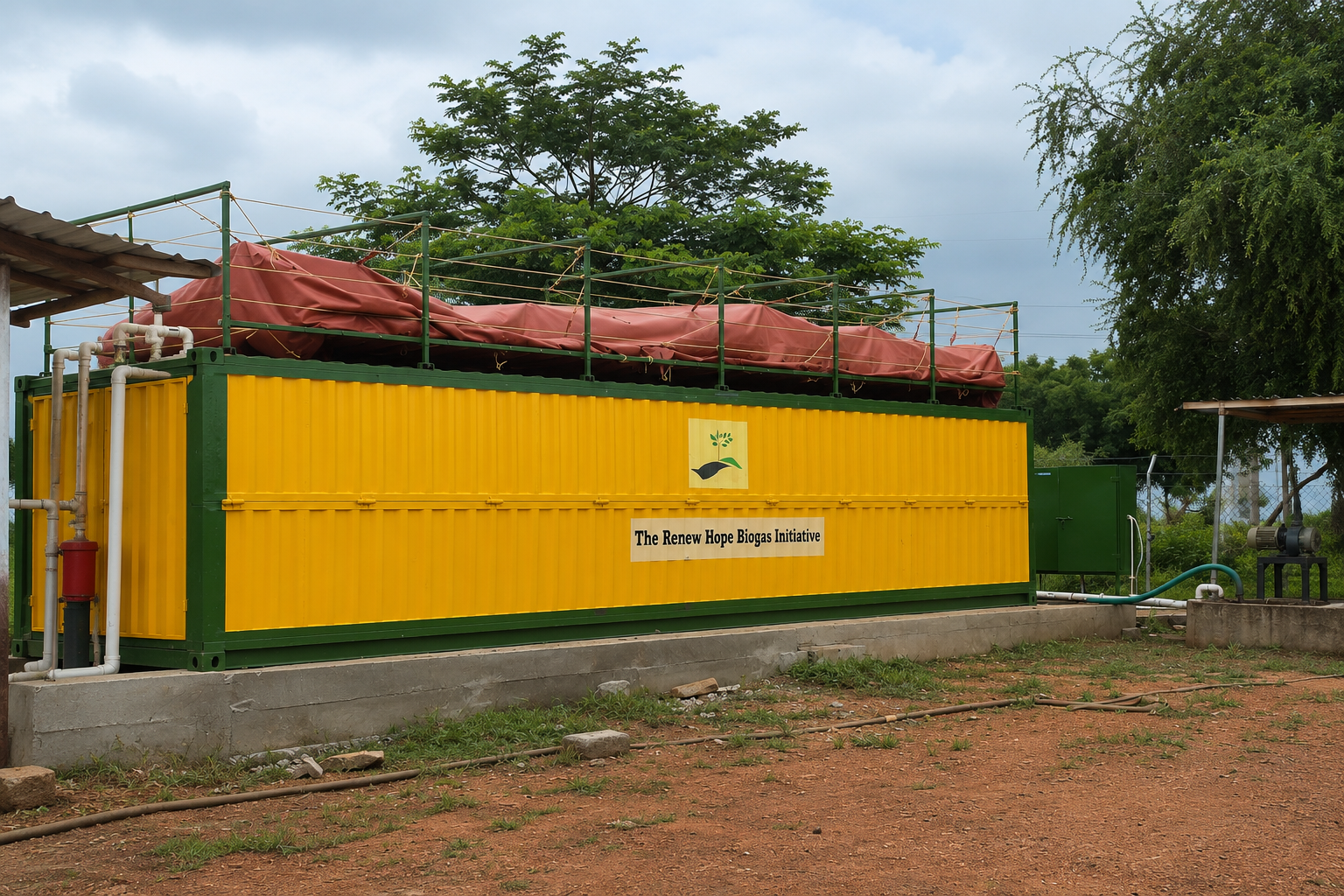
Built for real farms. Designed for real conditions.
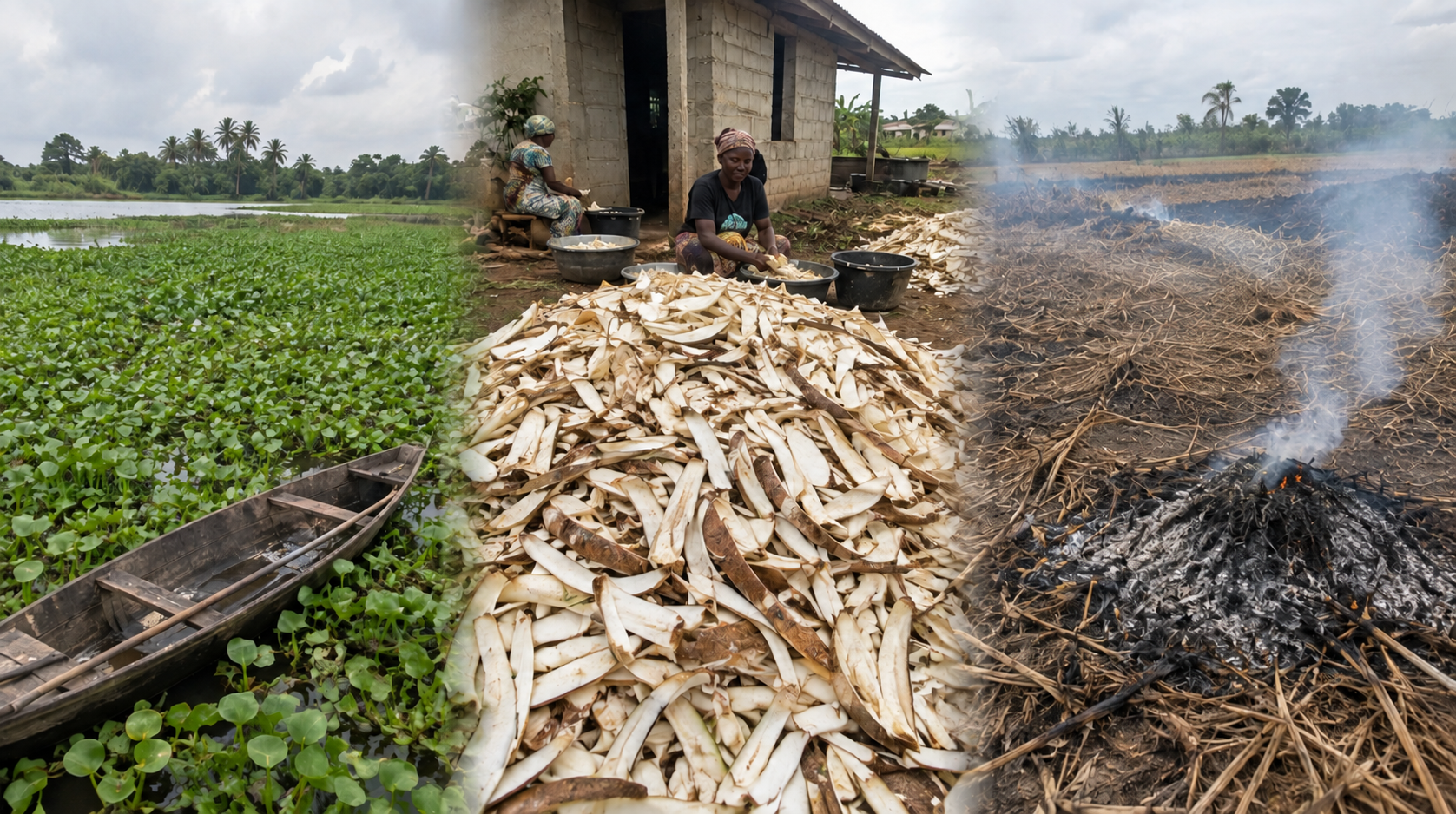
No dependence on animal manure
Processes crop residues, aquatic weeds, kitchen and organic waste and other organic waste. Not dependent on cow dung alone.
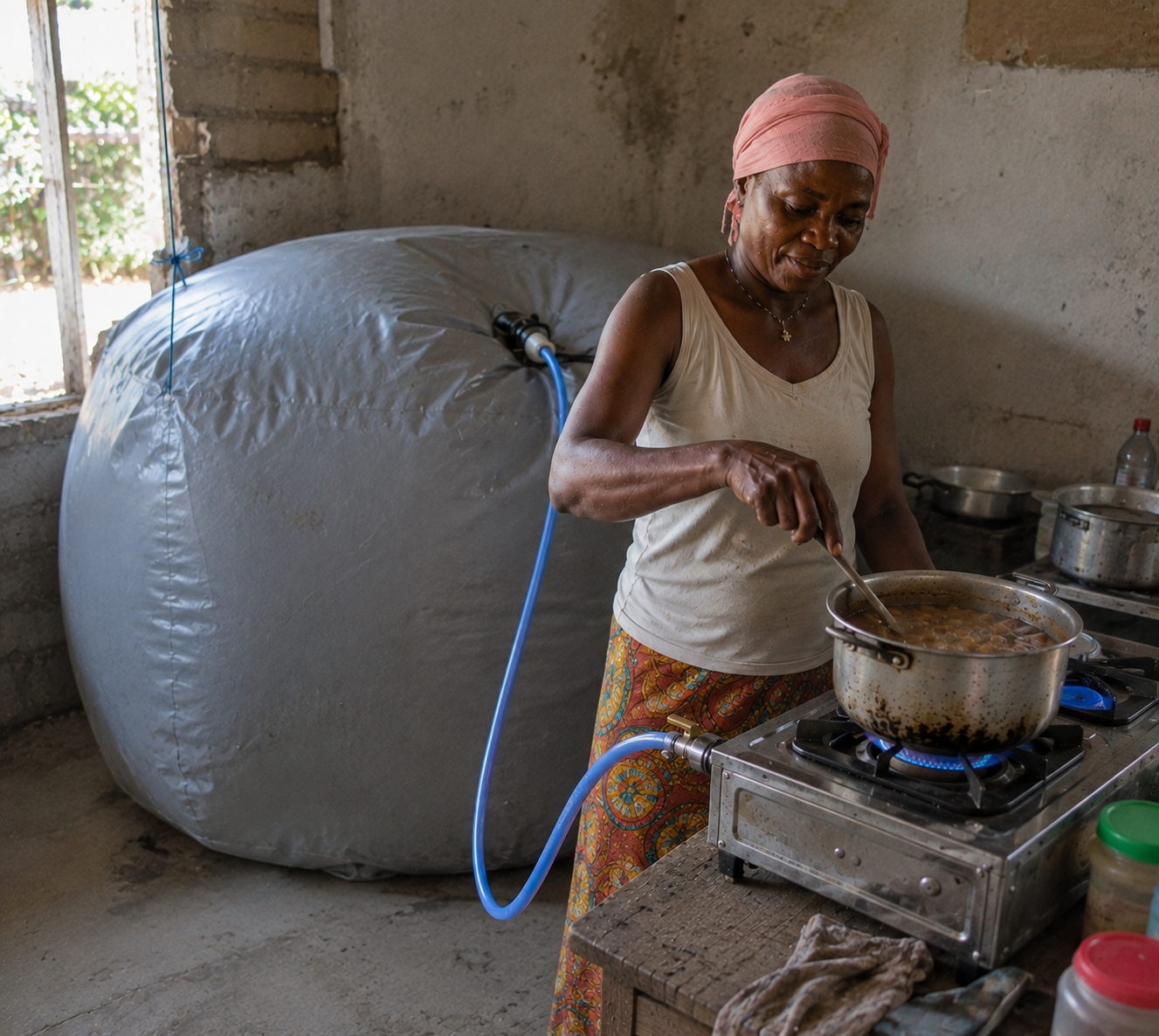
LPG like experience
Our portable household kit makes everyday cooking safe and maintains consistent pressure as LPG.
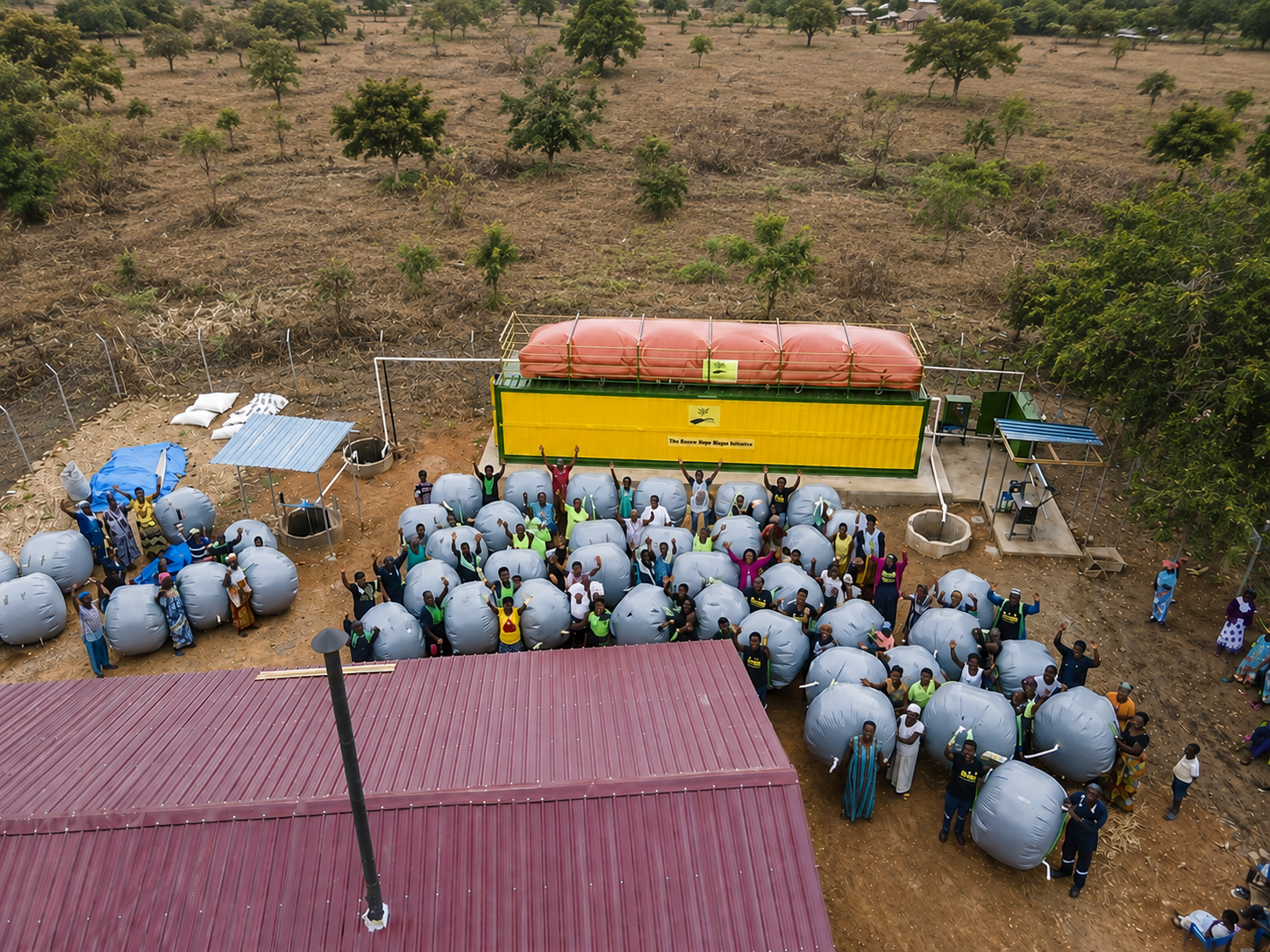
Built for communities
One central system supplies clean cooking energy to multiple households through a managed distribution network.
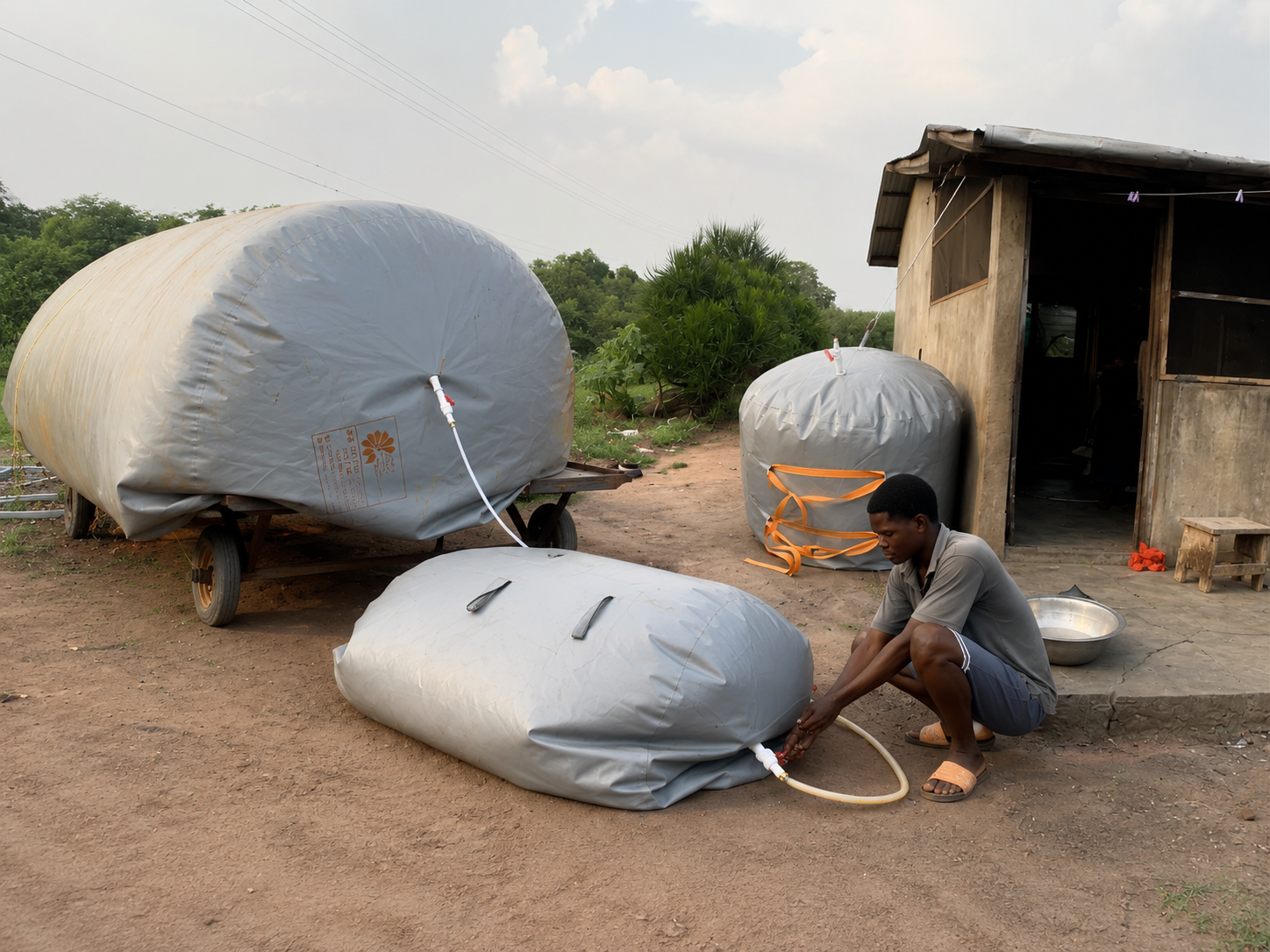
Pod-Based Distribution
Biogas is distributed directly to households through portable storage pods, ready for everyday use.
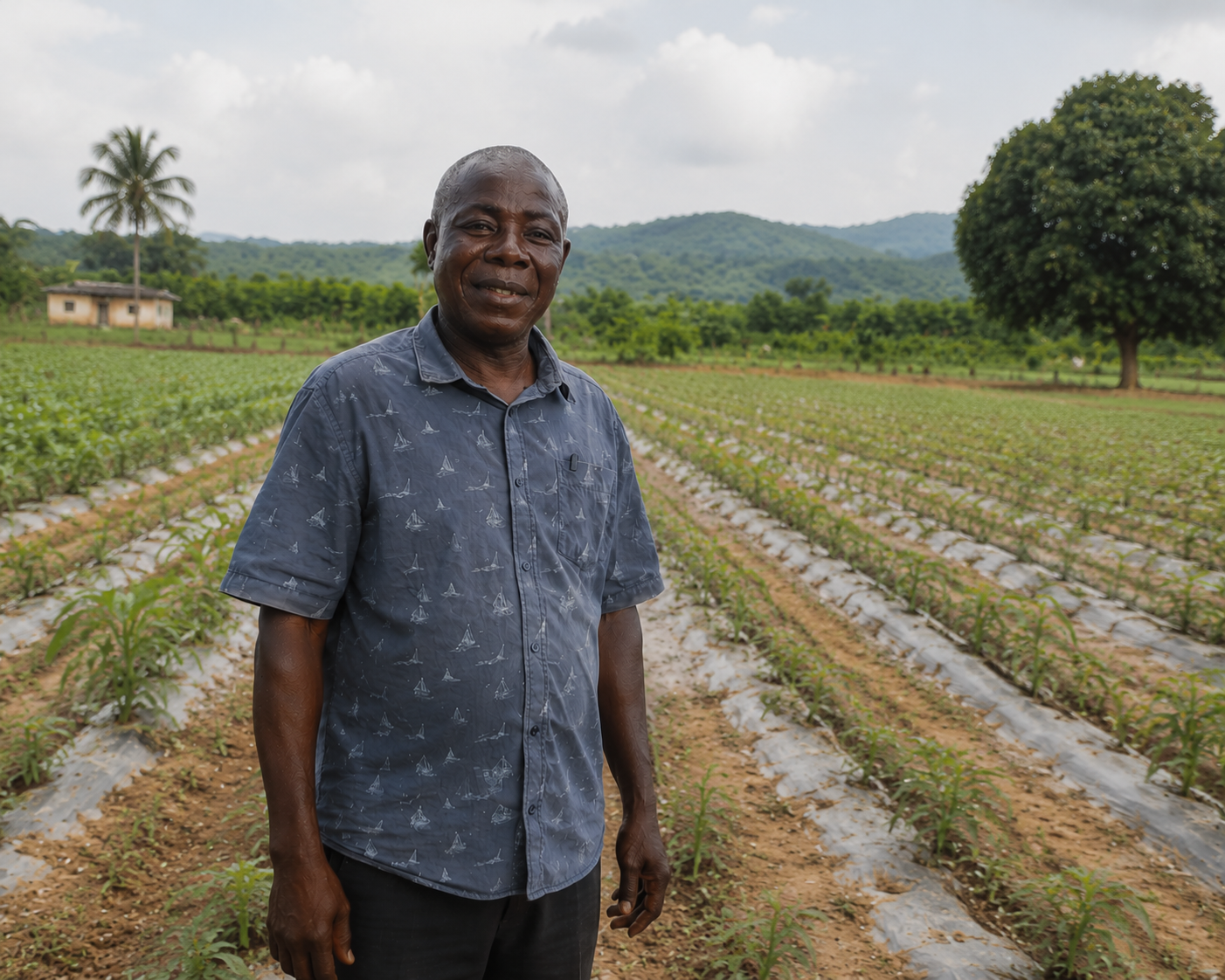
Creating micro entrepreneurs
We provide micro finance loan to individuals with waste abundance to run the biogas as a business.
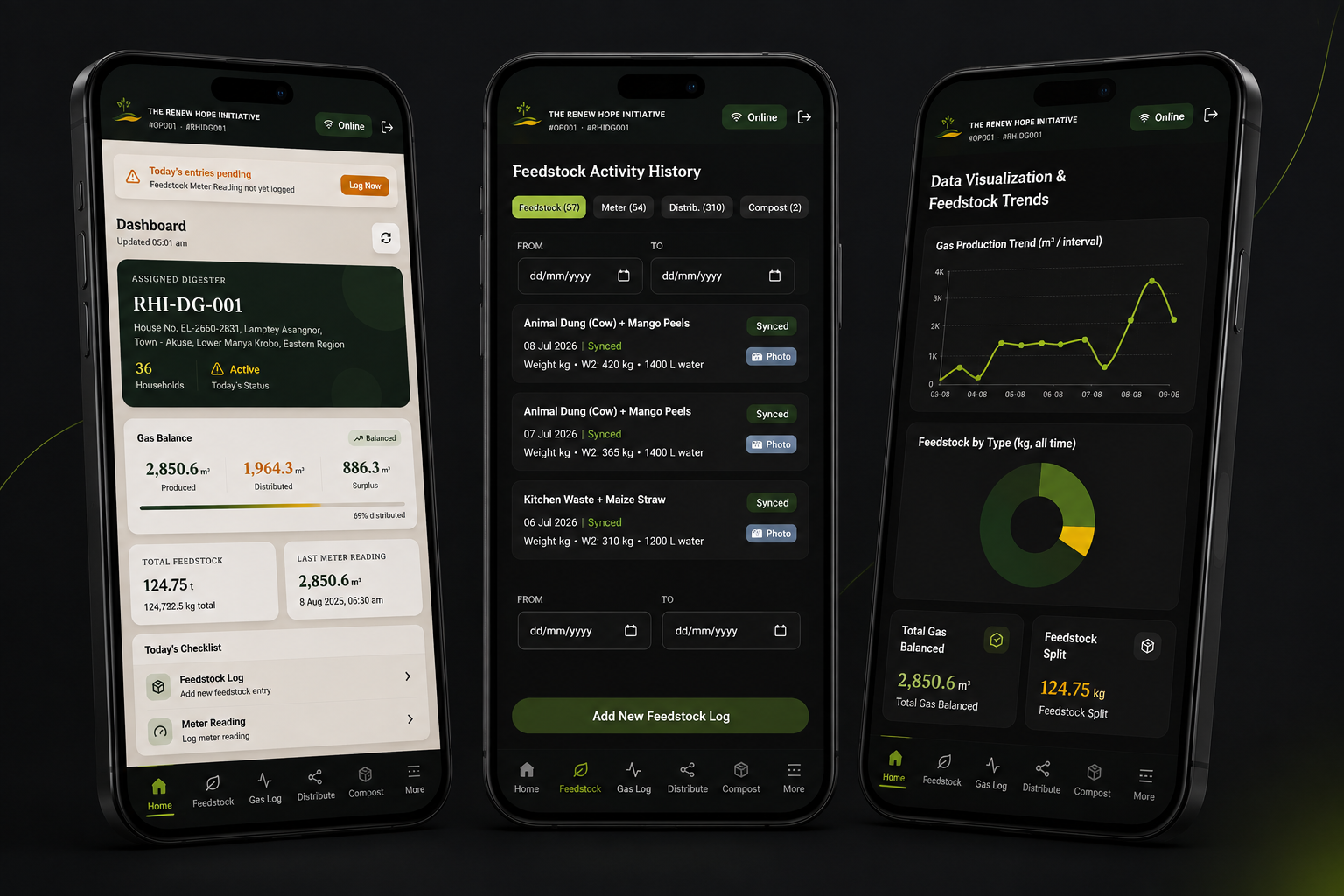
Monitoring technology
Daily production of biogas and feedstock monitored from every unit, with unique traceable IDs. Every digester is connected to our in-house monitoring platform, traceable for houses using biogas.
What comes off the farm goes back into it.
Nutrient-rich bioslurry
The digestate is processed into a biofertiliser, improving fertility season after season.
Ready to use. Ready to sell.
Applied directly on the farm or packaged as a market-ready biofertiliser by local entrepreneurs.

Carbon credits backed by real world data.
Every digester streams operational data to our proprietary monitoring platform, creating a transparent record that verifies climate impact from the field to the end user.
- Continuous field monitoring
- End-to-end traceability
- Carbon-ready reporting
- High integrity emission reductions
Households active
Waste processed to date
Biogas to date
80% cow dung · 20% organic waste
Organic waste — 38,000 kg
Interface shown with illustrative data.

Every digester reduces emissions where they begin.
- Methane captured from animal waste before it escapes into the atmosphere.
- Firewood and charcoal replaced with clean biogas.
- Smoke removed from the kitchen.

These biogas digester systems protect forests and improve the lives
of thousands of women.

A clean flame removes the daily smoke exposure linked to some of Sub-Saharan Africa's deadliest diseases.
Cooking with firewood and charcoal is associated with pneumonia, stroke, heart disease, COPD, and lung cancer.
Women and children bear the greatest burden.
Replacing smoky cooking with clean biogas removes the problem at its source.
What a single unit gives back.
people connected to clean cooking energy.
hours of women's time returned every year
children removed from daily cooking smoke
tCO₂e emissions reduced over its lifetime
kg of organic waste converted into energy and fertiliser every year
kg of fuelwood spared every year