What We Learned at Future of Energy Conference 2026
1 September 2026 · Clean Energy
Read4 August 2026 · 5 min read
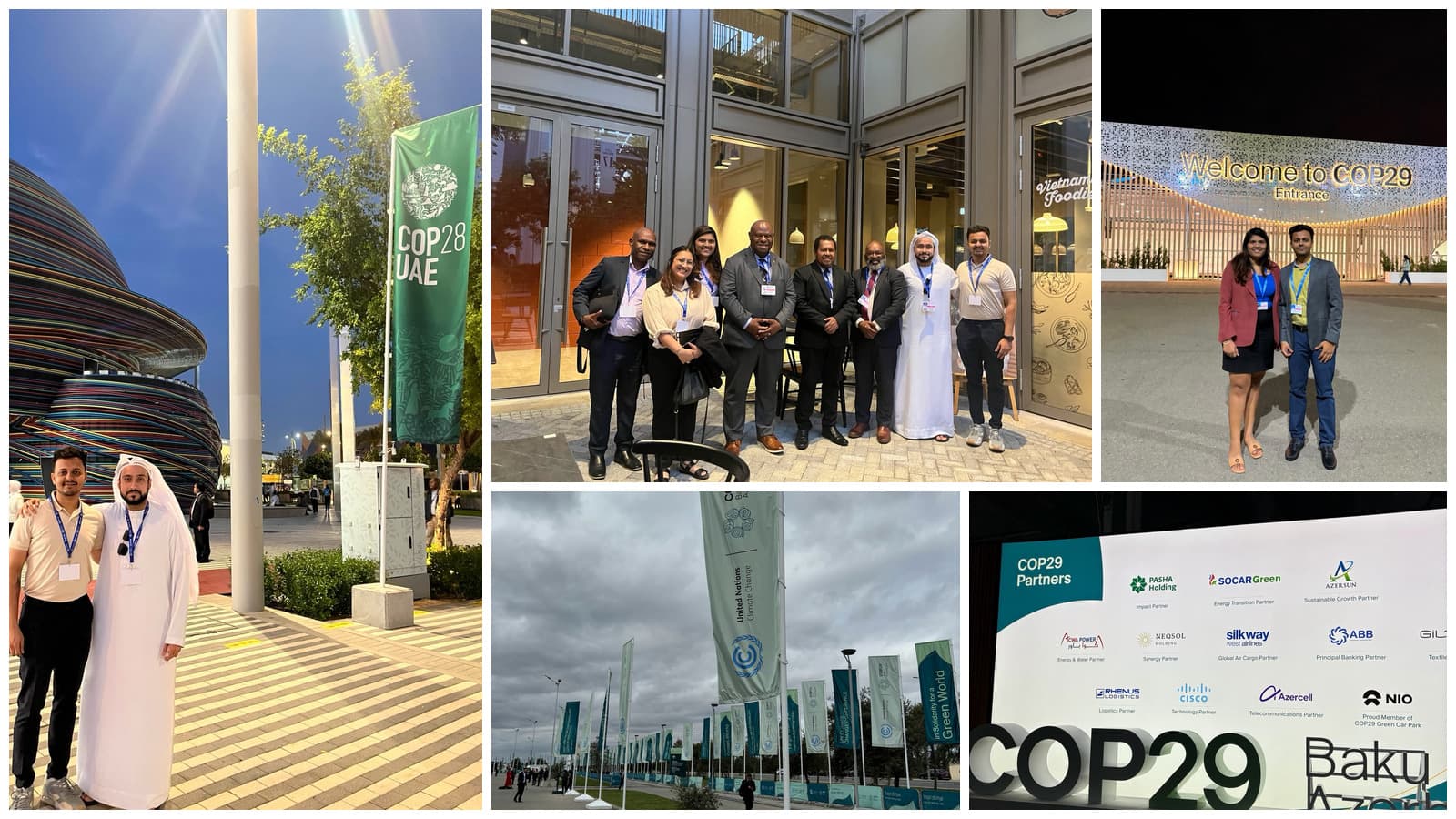
We represented Sustainology at COP28 in Dubai and COP29 in Baku. Across those two conferences, we saw the carbon market conversation move closer to implementation. For project developers, the question is no longer only whether a project can generate carbon credits. It is whether those outcomes can be authorised, accounted for and trusted by the people expected to use them.
That distinction now affects how we develop projects in Ghana and India. Host-country policy comes into the conversation earlier. Monitoring has to be designed for scrutiny from the start. And we do not assume that a carbon credit will automatically qualify for an international transfer.
What changed in carbon markets between COP28 and COP29?
At COP28, countries did not reach agreement on additional guidance for either Article 6.2 or Article 6.4 of the Paris Agreement. The technical questions were carried forward for further work.
COP29 moved several of those questions forward. The Article 6.2 decision addressed authorisation, reporting, the treatment of first transfers, registry infrastructure, consistency checks and how inconsistencies should be handled.
That sounds procedural. For a project developer, it is not.
Article 6.2 allows countries to cooperate through Internationally Transferred Mitigation Outcomes, or ITMOs. Countries participating in these approaches must account and report for those transfers under the Paris Agreement framework.
The practical implication is that the carbon methodology is only one part of the project architecture. The host country's policy, its climate target and its willingness to authorise a transfer can matter just as much.
Why is host-country authorisation now a project-development issue?
A project developer cannot create an Article 6 authorisation.
That authority sits with participating countries. COP29 provided more detail on what authorisations should contain and how changes to an authorisation should be treated. It also strengthened the transparency around authorisation information through the Article 6 reporting infrastructure.
This is one of the biggest takeaways from the two COPs.
When developing a project with a potential Article 6.2 route, we now need to understand the host-country framework before making assumptions about the final carbon asset. Is the activity eligible under the country's policy? Does it contribute to a sector the country may want to retain towards its own climate target? Is there an established authorisation process?
Those questions belong near the beginning of development, not at the end.
For our work in Ghana and India, that means separating two things clearly: developing a high-integrity mitigation project, and determining whether its mitigation outcomes could ultimately receive host-country authorisation for international transfer.
They are related. They are not the same thing.
What does a corresponding adjustment actually mean?
A corresponding adjustment is the accounting step designed to prevent the same mitigation outcome from being counted by two countries towards their climate targets.
Under Article 6.2, internationally transferred mitigation outcomes can be used by another country towards its Nationally Determined Contribution, or NDC, subject to the Paris Agreement accounting and reporting rules.
For a project developer, the important point is simpler: a corresponding adjustment is not a label that a developer can add to a credit.
It depends on authorisation and government accounting.
That changes how projects should be presented to buyers. We would rather distinguish clearly between a project designed with an Article 6 pathway in mind and a mitigation outcome that has actually received the required authorisation than treat the two as interchangeable.
The same discipline applies when talking about future Internationally Transferred Mitigation Outcomes. Until the relevant government action has occurred, they should not be described as authorised ITMOs.
Are carbon buyers becoming more selective?
That was one of the clearest changes we observed between Dubai and Baku.
The discussion was increasingly about what sits behind the credit: additionality, methodology quality, monitoring, permanence where relevant, safeguards and the credibility of the underlying project.
There was also a more visible external benchmark for this discussion. During the period between COP28 and COP29, the Integrity Council for the Voluntary Carbon Market began approving methodologies against its Core Carbon Principles, or CCPs, and the first CCP-labelled credits became available.
A CCP label does not make every other credit unusable. Nor does it remove the need for buyers to assess a project themselves. But it reflects the broader direction we saw in the market: quality claims increasingly need evidence behind them.
Our conclusion is that project developers should prepare for more diligence, not less.
That means being able to show where the baseline came from, how activity data is collected. What happens when data is missing. Who controls the monitoring process. What safeguards apply on the ground. And what exactly a buyer is purchasing.
This is also why digital monitoring, reporting and verification, or dMRV, has become more important in how we think about project infrastructure.
What did we change after attending COP28 and COP29?
The biggest change was sequencing.
We used to be able to treat several carbon-market questions as workstreams that could develop alongside the physical project. We now bring some of them much closer to the front.
For projects that could seek an Article 6 pathway, we look at host-country policy early. We distinguish project eligibility from government authorisation. And we build monitoring around the evidence that future buyers, auditors and public authorities are likely to ask for.
That approach matters especially for the types of projects we work on: circular agriculture, clean energy and land-based climate action.
Where are carbon markets actually going?
COP29 did not remove uncertainty from carbon markets. It made more of the machinery visible.
Our takeaway from attending COP28 and COP29 is that the next phase of carbon project development will be less forgiving of projects built around the credit alone. Developers will increasingly need to understand the host country's climate strategy, produce traceable evidence from the field and explain exactly what status their carbon asset has.
For developers working now, the next step is practical. Map the host-country authorisation process before assuming an Article 6 route, and design the monitoring system before implementation creates data gaps that cannot be repaired later.
Keep reading
1 September 2026 · Clean Energy
Read
10 August 2026 · Clean Energy
Read
5 August 2026 · Carbon Removal
Read